

Records 1995
1995 Cabinet decisions
Under the Northern Territory Information Act, public sector organisations are required to transfer their records to Library and Archives NT not later than 30 years after the record was created.
Most archived records enter an 'open access period', whereby they are available for public perusal 30 years after the record was created. This includes the Cabinet records.
The original copies of all Northern Territory Cabinet submissions and decisions are filed by meeting date, and bound into books. These books are then transferred to Library and Archives NT for safekeeping and preservation.
Indexes of Cabinet records
A full listing of Cabinet decisions and Executive Council records from 1995 are available:
Index of Cabinet submissions and decisions PDF (1.4 MB)
Index of Cabinet submissions and decisions DOCX (316.7 KB)
Index of Executive Council records PDF (227.8 KB)
Index of Executive Council records DOCX (133.7 KB)
Not all Cabinet decisions are available to view. Listings of exempt records are available:
Cabinet documents exempted from 30 year release PDF (219.3 KB)
Cabinet documents exempted from 30 year release DOCX (126.7 KB)
Viewing Cabinet information
Information available for viewing can be accessed by appointment at the NT Archives Centre.
For more information and to make an appointment, contact Libraries and Archives NT.
Issues of interest in the Cabinet records for 1995
Please see below a list of issues of interest for 1995 Cabinet records.
Nitmiluk Tourist Precinct site development plan
Nitmiluk (Katherine Gorge) National Park - Gurriluk (Gorge) Tourist Precinct site development plan
In March 1995, Cabinet endorsed the Gurriluk (Gorge) Tourist Precinct site development plan. The site development plan was the product of a lengthy development process between the Conservation Commission of the Northern Territory and the Jawoyn Association, representing Jawoyn Traditional Owners. The development of the plan and its endorsement by Cabinet demonstrated the success of the joint management of Nitmiluk National Park.
The plan provided for the upgrade of depleted park infrastructure, including privately operated facilities that at the time were of a low standard and poorly coordinated. The plan made provision for the establishment of a commercial centre, self-contained cabins and the redevelopment of the gorge’s existing campground and caravan park.
The government’s Northern Territory Tourism Development Master Plan (1993) had already identified Nitmiluk as a high-profile park requiring priority development. With the endorsement of the Jawoyn Association and its joint venture partners Travel North, the site development plan enjoyed the backing of all the relevant major stakeholders. In endorsing the plan, Cabinet recognised that Nitmiluk was a key Northern Territory tourism destination that played a vital role in the economy of the Katherine region.
The only condition that Cabinet placed on its approval of the site development plan was that the park’s Board of Management and the Jawoyn Association were not to seek to introduce park entry fees for a 10 year period.
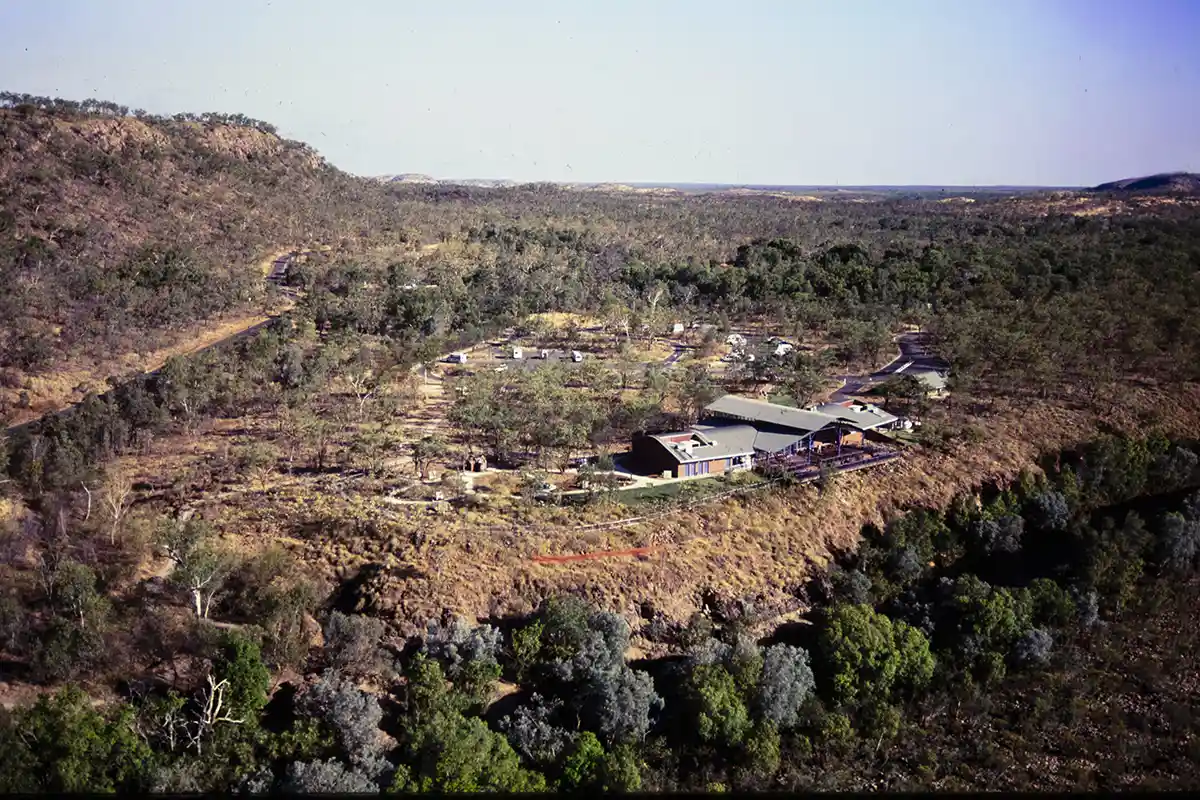
Aerial view of the Visitor Centre of Nitmiluk National Park near Katherine NT. Katherine River in the foreground, escarpment behind.
Image courtesy of Library & Archives NT, NT Tourist Commission, NTRS 4967 P1, Box 7, Item (Slide Box 83) 971617, photographer David Hancock, (no date).
Read the Cabinet decision: Submission No. 7217/Decision No. 8622 of 16 March 1995/Volume 459C PDF (3.5 MB)
Mary River National Park concept plan
Revised Lower Adelaide River Wetlands, Wildlife and Tourism concept plan, and proposed Mary River National Park concept plan
Cabinet endorsed the Lower Adelaide River wetlands, wildlife and tourism concept plan and the proposed Mary River National Park concept plan as the basis for development of Adelaide and Mary River wetlands adventure tourism on 16 March 1995.
Both concept plans were consistent with the Northern Territory Development Master Plan goal for the 2 river catchments of creating recommendations to stimulate appropriate private investment within a framework of conservation and multiple use tourism.
The concept plans followed a period of public consultation and work by the government to allay the fears of landholders about the Conservation Commission of the Northern Territory expanding its land holdings in the area. They also recommended broader land use planning in the areas land use planning processes.
Unusually, elements of the Concept Plans were implemented before they were endorsed by Cabinet, such as the Windows on the Wetlands Visitor Information Centre and capital works at the Fogg Dam Conservation Reserve.
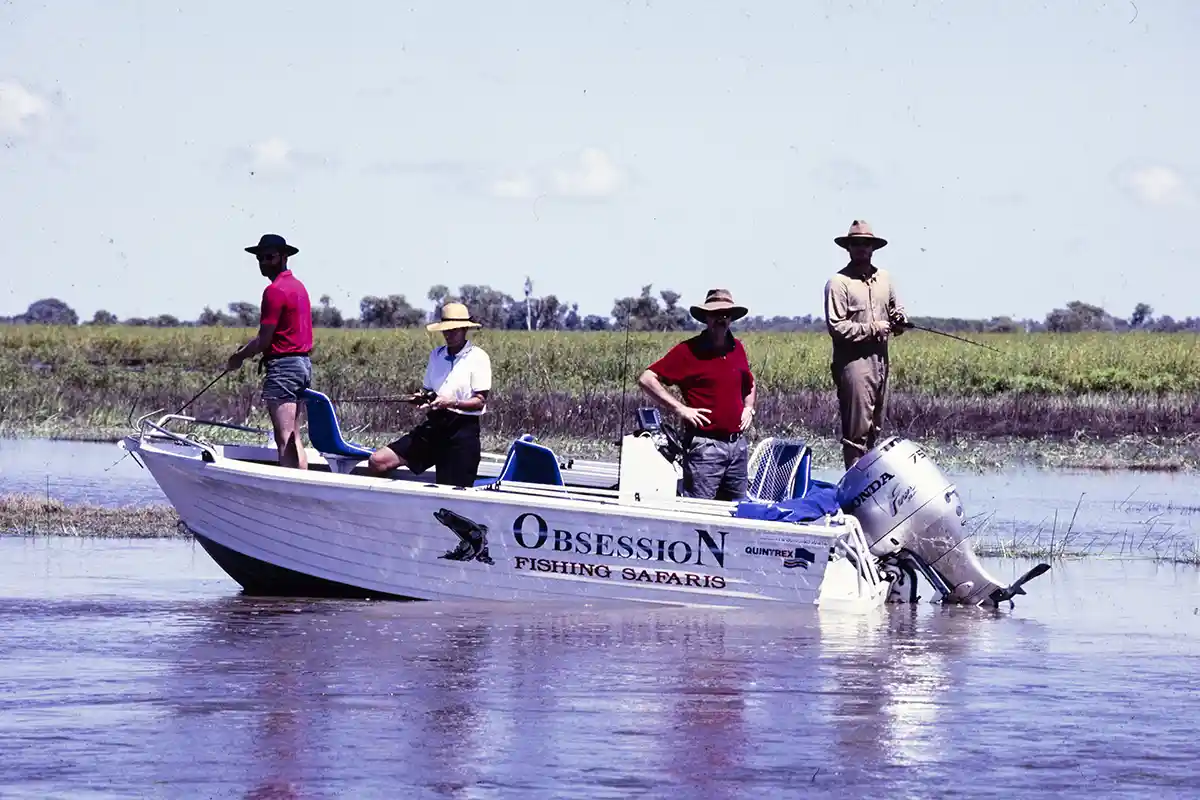
Shady Camp is a popular destination to go barramundi fishing
Image courtesy of Library & Archives NT, NT Tourist Commission, NTRS 4967/P1, Box 9, Item (Slide Box 103) 981248, photographer David Hancock, (no date).
Read the Cabinet decision: Submission No. 7218/Decision No. 8623 of 16 March 1995/Volume 459C PDF (10.1 MB)
Exploring the Alice
On 16 March 1995, Cabinet approved funding for a range of measure designed to better inform visitors of the range of attractions available in Alice Springs and to enhance their interpretation and linkages. These measures were included in the Exploring the Alice programme planning report, released the previous year.
The Exploring the Alice report was commissioned by the Department of Transport and Works and the Conservation Commission of the Northern Territory. A steering group comprised of locally active government, tourism, Indigenous and cultural organisations guided the report’s development. The report recommended the development of a series of evocative and practical theme trails, an interpretive sign system and a visitor guide scheme. One recommendation was for the establishment of a central Visitor Information Centre.
The development of the report was supported by the Northern Territory Development master plan and the Pacific Asia Travel Association report on Central Australia.
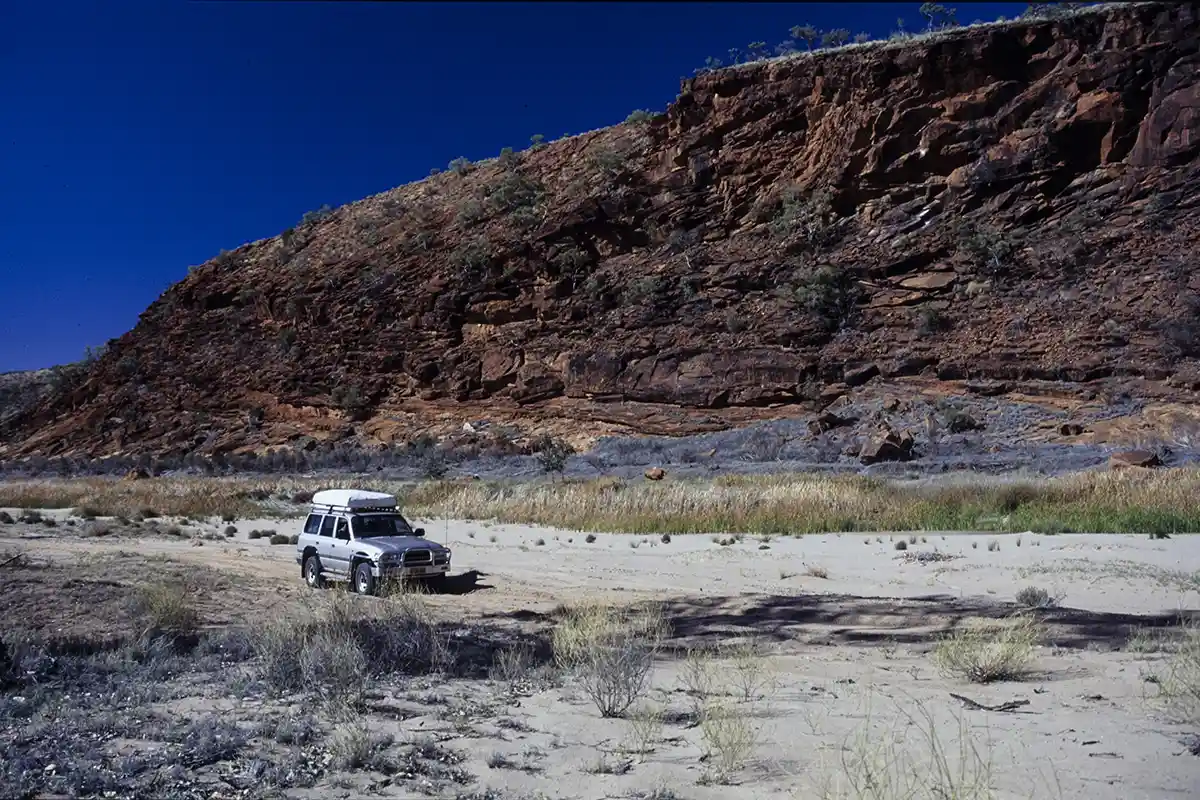
West MacDonnell - Finke Gorge National Park 4WD track in the Finke Gorge National Park
Image courtesy of Library & Archives NT, NT Tourist Commission, NTRS 4967/P1, Box 10, Item (Slide Box 113) 965567, photographer Don Skirrow, 1996.
Read the Cabinet decision: Submission No. 7219/Decision No. 8624 of 16 March 1995/Volume 459C PDF (6.8 MB)
Rights of the Terminally Ill Amendment Bill
With the passage of the Rights of the Terminally Ill Act on 25 May 1995, the Northern Territory Legislative Assembly became the first legislature in the world to pass a law explicitly legalising euthanasia. During parliamentary sittings in November of that year, Cabinet approved amendments to the Act. These amendments were signed into law as the Rights of the Terminally Ill Amendment Bill.
Most prominent among the amendments was one requiring 2 medical practitioners to assess a patient’s terminal illness and another requiring a third medical practitioner to assess the patient’s state of mind at the time of them making a request for assistance.
The passage of the Act and its amendments were marked by controversy within the Northern Territory, nationally and internationally. Heated debate between assisted dying advocates and Indigenous, Catholic and medical organisations marked the introduction of the legislation.
In 1997, these laws were controversially nullified by the Commonwealth government. This federal override was removed on 13 December 2022, and the issue of assisted dying has come before the NT Legislative Assembly once more.
Read the Cabinet decision: Submission No. 7440/Decision No. 8944 of 14 November 1995/Volume 479 PDF (4.0 MB)
Partnering with Aboriginal people in NT Fisheries management
Promoting partnerships with Aboriginal people in the management and development of NT Fisheries resources
On 16 March 1995, Cabinet ratified several measures under the above decision. The measures established an expanded process of government consultation with coastal Aboriginal communities regarding the management of estuarine and sea fisheries along the Northern Territory coast. The measures also provided support for a government extension and liaison service for Aboriginal fishing enterprises.
The changes ratified by this decision followed a positive sector-wide response to the new Anindilyakwa Consultative Committee , established in 1993. This committee was comprised of Anindilyakwa, federal fisheries management, law enforcement and commercial fishing representatives. This Cabinet decision endorsed the establishment of up to 7 additional regional fisheries consultative committees, to be administered by the Tiwi and Northern land councils.
With support from the relevant Aboriginal land councils, the measures ratified by this decision were among the first efforts by the Northern Territory Government to facilitate Aboriginal involvement in the use of Aboriginal fisheries under the national Native Title Act 1993.
Read the Cabinet decision: Submission No. 7195/Decision No. 8599 of 16 March 1995/Volume 459A PDF (2.6 MB)
Crocodile farming industry strategy
In March 1995, Cabinet approved an NT crocodile farming industry strategy with continued funding for associated activities. The aims of the strategy were to promote the conservation of crocodiles, to promote better economic returns for the industry, and to set out objectives and strategies for further development of the industry. The strategy sought to do this by increasing the range of major markets, adding to the value of raw product, and increasing the production of saltwater crocodile skins on existing crocodile farms.
Under the strategy, responsibility for management of the Northern Territory’s crocodile population was split. The Department of Primary Industry and Fisheries (DPIF) took responsibility for the NT’s crocodile farming industry. Responsibility for wild populations fell to the Conservation Commission of the Northern Territory. Selected DPIF staff were also to be trained as honorary conservation officers, to assist in the regulation of crocodile farms.
The following year, a publication titled A handbook of Australian Crocodile Meat was developed with the assistance of the Queensland Department of Primary Industries. The handbook described standard cuts of crocodile meat to assist the industry in the marketing of crocodile meat within Australia.
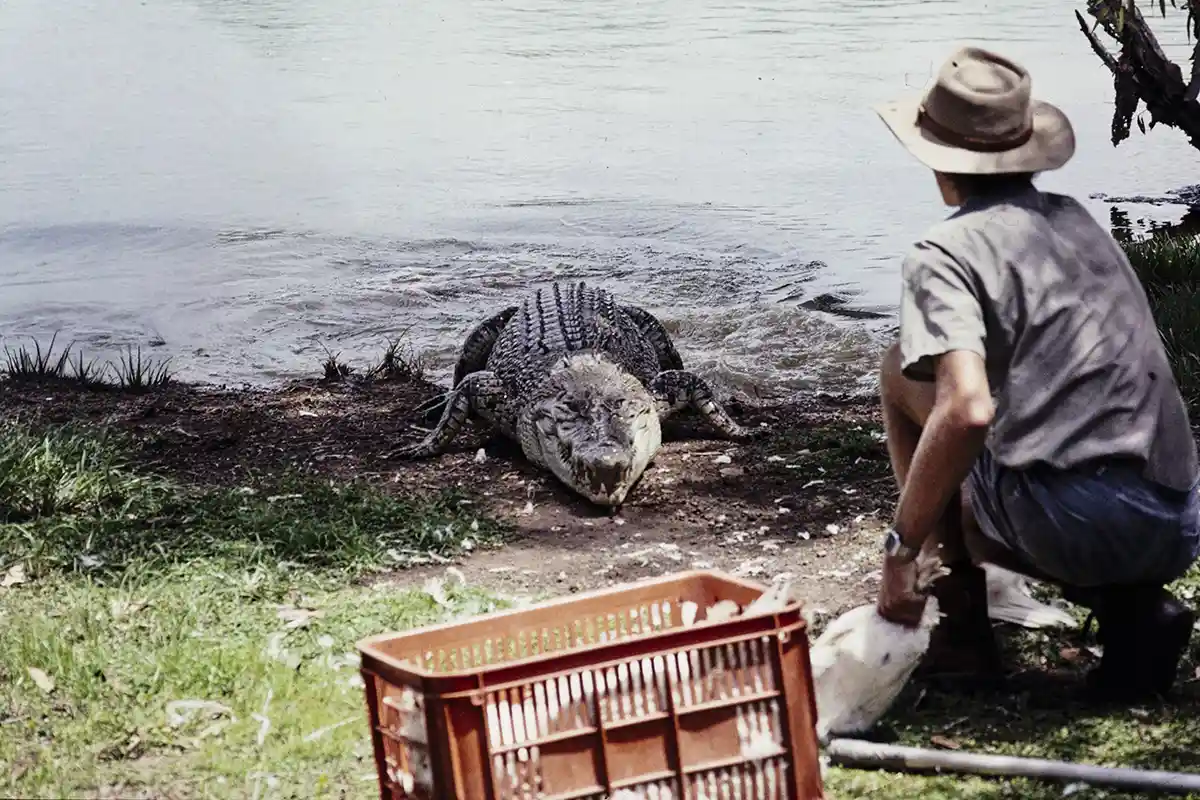
Crocodile Farm Darwin
Image courtesy of Library & Archives NT, NT Tourist Commission, NTRS 4967 P1, Box 6, Item (Slide Box 63) unnumbered, (photographer unknown, no date).
Read the Cabinet decision: Submission No. 7196/Decision No. 8600 of 16 March 1995/Volume 459A PDF (4.1 MB)
Principles for a culturally diverse society
In October 1995, Cabinet endorsed a government policy statement titled principles for a culturally diverse society. The intention of the statement was to guide further development of policies, programs and services to address the needs arising from the Territory’s diverse society. Rather than perceiving the Northern Territory’s diversity as a challenge or weakness, Cabinet’s position was reflected in a statement made by the Chief Minister on 23 May 1995, in which he described the Northern Territory’s cultural and linguistic diversity as a 'base [that] enriches the lives of all Territorians'.
At the time, there were more migrants residing in the Northern Territory from the United Kingdom, New Zealand, the Philippines and Indonesia than other countries. Forty-four thousand, four hundred and eighty-six Northern Territory residents identified themselves as Aboriginal in the Australian Bureau of Statistics census of the following year.
The statement from the Northern Territory Government’s Office of Ethnic Affairs was largely based on the NSW Government’s charter of principles of the same name. In the early-mid 1990s, similar statements were adopted by the majority of states and territories in Australia.
The principles of the Northern Territory statement included the following:
- All Territorians should have the greatest possible opportunity to contribute to, and participate in, all levels of social, political, economic and cultural life.
- All Territorians should respect the culture, language and religion of others within the Commonwealth and Northern Territory legal framework.
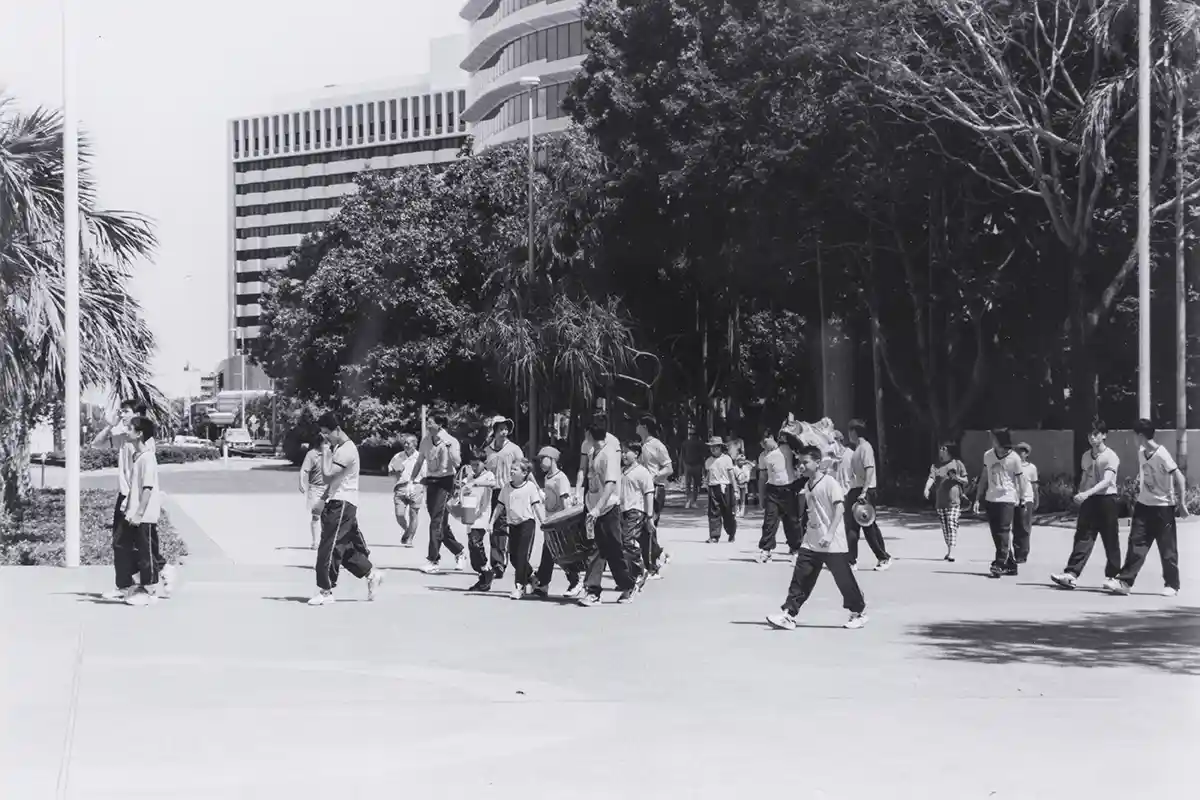
Chinese New Year (Year of the Pig) Chung Wah Society Chinese lion dance troupe crossing the square in front of Parliament House. NT House and Sheraton Hotel above the trees.
Image courtesy of Library & Archives NT, Leith Barter, ItemPH0623/0126, Chinese Lion Dance Troupe, 3 February 1995.
Read the Cabinet decision: Submission No. 7414/Decision No. 8906 of 24 October 1995/Volume 477 PDF (4.5 MB)
Development of Darwin Botanic Gardens
In May 1995, Cabinet voted to approve a draft master plan for the Darwin Botanic Gardens and its staged implementation.
The development of the master plan followed the NT Government’s acquisition of the site from Darwin City Council in 1990. At the time, the Darwin Botanic Gardens was underdeveloped as a tourism attraction and large areas of the gardens were submerged during the wet season. The situation was the consequence of haphazard development and uncoordinated planning over the previous century.
The master plan was prepared for the Conservation Commission of the Northern Territory in July 1994 by Gutteridge, Haskins and Davey EcoSystems and Landplan Studio (landscape architects). It built on 2 earlier reports and contained 4 key elements:
- adoption of a development theme for visitors
- world standard interpretation and interactive visitor experiences
- development of infrastructure including construction of a visitor centre
- rectification of flooding and inundation problems.
At the time of Cabinet’s decision, the gardens had some 154,000 visitors per year. Fourty-five percent of these were of international origin, with the remainder equally distributed between NT and interstate-based visitors.
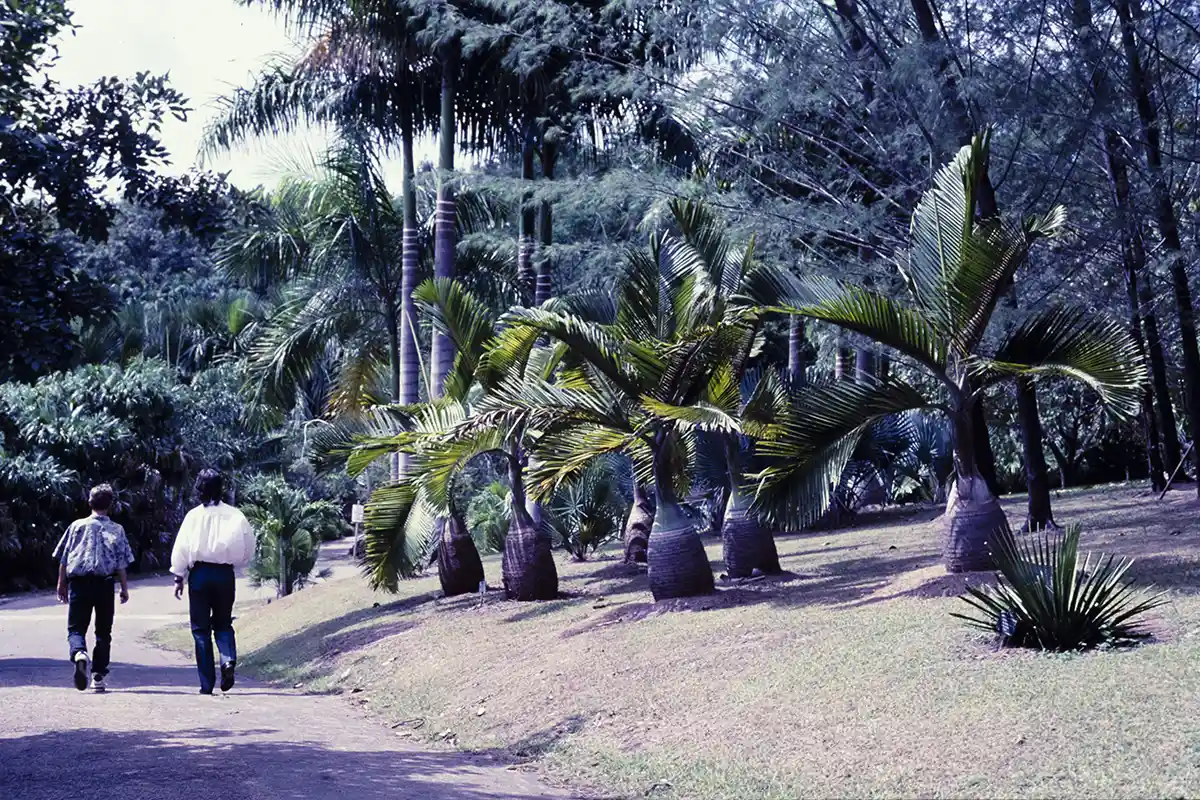
Botanic Gardens Darwin
Image courtesy of Library & Archives NT, NT Tourist Commission, NTRS 4967/P1, Box 11, Item (Slide Box 121) 960074, photographer Don Skirrow, 1996.
Read the Cabinet decision: Submission No. 7257/Decision No. 8672 of 2 May 1995/Volume 464A PDF (12.0 MB)
Future directions for the rural and fishing industries
In February 1995, Cabinet voted to approve 2 future directions statements for the Northern Territory rural and fishing industries. Titled the fishing industry in the Northern Territory and rural industries in the Northern Territory, the statements had been developed by the Department of Primary Industries and Fisheries after a year-long process of consultation.
Issues addressed by the fishing statement included sustainability, resource allocation, Aboriginal interests, commercial development, recreational fishing and aquaculture development.
The rural industries statement considered topics such as pests, diseases and weeds, market diversification, profitability, sustainability and training.
To implement the statements, the development of working partnerships between stakeholders and the Department of Primary Industries and Fisheries was deemed necessary. The intention of the department in the subsequent 12 months was to develop these partnerships with a range of stakeholders, including Aboriginal Land Councils, non-government organisations, industry representative bodies, other Northern Territory Government agencies, advisory bodies and the Northern Territory University.
The outlook for many of the Northern Territory’s rural and fishing industries was good in 1995. There had been a heavy wet season in the Top End in 1994/95. Record harvests of mud crab and barramundi followed, as did healthy pasture cropping in the north. South of Barrow Creek, the situation was reversed, with severe drought and low cattle prices badly affecting the pastoral industry in Central Australia. Central Australian famers were pleased however, that table grapes became the second most valuable crop in the Northern Territory after mangos.
Read the Cabinet decision: Submission No. 7162/Decision No. 8551 of 7 February 1995/Volume 457 PDF (11.6 MB)
Print all pages in this section
Give feedback about this page.
Share this page:
URL copied!